


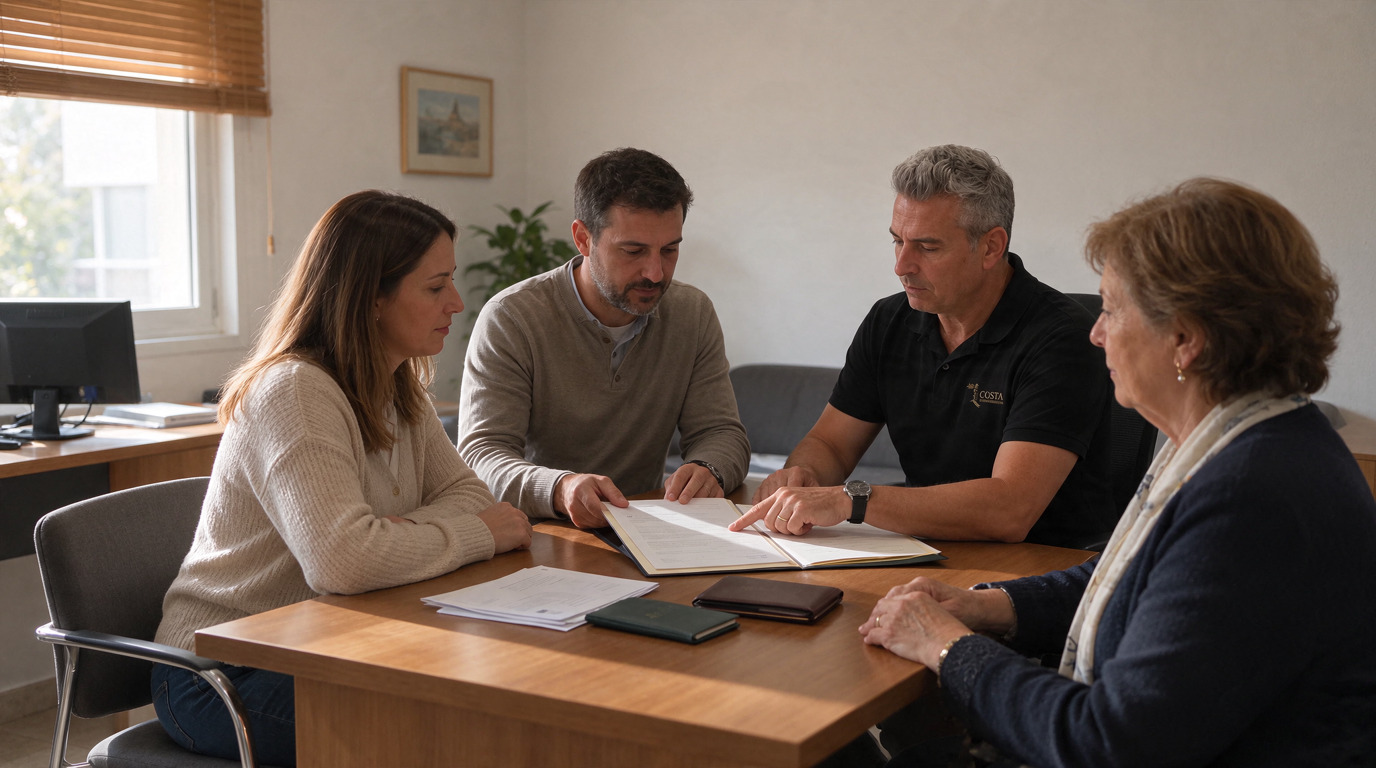

When someone dies in Spain and their family wishes to bring them home to another country, the repatriation process can involve several documents, authorisations and transport arrangements.
For families living abroad, understanding where to begin can be particularly difficult. The process may involve funeral professionals in Spain, the consulate of the destination country, health authorities, an airline and a funeral director in the receiving country.
The requirements and procedures can vary depending on the destination and the circumstances of the death. This guide explains the main steps involved and how a funeral director can help coordinate the arrangements.
What should you do first when repatriating a loved one from Spain?
The first step is to contact a funeral director in Spain as soon as possible.
A funeral director can explain the process, identify the documents and authorisations that may be required and guide the family through the arrangements.
Even if the deceased had funeral insurance, families can generally arrange the service with the funeral director of their choice. It is worth discussing the available options directly with the funeral director and the insurer.
It is advisable not to make travel or memorial arrangements in the destination country before speaking with the funeral director in Spain. The expected arrival date will depend on the documentation, the consular process and available flights.
What documents are needed to repatriate a deceased person from Spain?
The documentation required for repatriation depends on the destination country and the circumstances of the case. Some documents are commonly required, while others may be specific to the consulate or the receiving country.
According to the professional information provided by Costa Funeral Services, the documentation may include:
- The relevant authorisation for the funeral arrangements.
- The burial or interment licence, where applicable.
- Literal death certificates.
- Authorisation from the consulate of the destination country.
- An embalming certificate.
- Authorisation from the relevant Spanish external health authority.
- Details of a funeral director in the destination country.
The receiving funeral director is important because the airline may require the destination funeral home’s details before accepting the booking for the deceased.
This list is a general guide, not a universal checklist. The exact documents and procedures must be confirmed for the destination country and the individual case.
Who manages the repatriation paperwork?
The funeral director in Spain can coordinate the documentation required for the repatriation and communicate with the relevant authorities and organisations.
In most cases, the family does not need to manage each administrative step independently. However, a consulate may occasionally request a specific procedure or a document that must be provided personally by a family member.
For this reason, it is important to keep in contact with the funeral director and respond promptly if additional information or authorisation is requested.
Does the repatriation process vary depending on the destination country?
Yes. The process can vary according to the destination country, its consular requirements and the circumstances of the death.
Based on the experience shared by Costa Funeral Services, repatriations to European countries are often more straightforward to coordinate. Some destinations in Eastern Europe and Latin America may involve more complex procedures.
However, every case is different. The funeral director must confirm the requirements with the relevant consulate and authorities rather than relying on general assumptions about a country or region.
How is the deceased prepared for international transport?
International repatriation usually involves specific preparation and transport requirements.
According to the professional guidance provided by Costa Funeral Services, embalming is required for repatriation in the cases they manage. A special hermetic bag with gas-filtering features is also used, together with a coffin and an additional protective covering for the journey.
The deceased is normally transported by funeral vehicle to the airport. Before the transport can proceed, the relevant checks are carried out to ensure that the arrangements and documentation meet the requirements.
Preparation and transport requirements may depend on the destination country and the circumstances of the death. The funeral director should confirm the applicable procedure for each case.
How long does repatriation from Spain take?
There is no single timeframe for repatriating a deceased person from Spain.
The main factors that can affect the timing include:
- The time needed to obtain the required documentation.
- The procedures and response times of the destination country’s consulate.
- The availability of suitable flights.
- Any additional authorisations or checks required in the individual case.
Flights do not operate to every destination every day, and the consular process can take different amounts of time depending on the country.
The funeral director can provide an estimate once the destination and the circumstances are known, but the expected arrival date should not be treated as guaranteed until the necessary arrangements have been confirmed.
How much does it cost to repatriate a loved one from Spain?
The cost of repatriation depends on the destination and the arrangements required for the individual case.
According to Costa Funeral Services, the flight is one of the main factors that can influence the total cost. Additional consular expenses may also apply, depending on the destination and the requirements of the case.
To obtain an individual estimate, the funeral director will need to know the destination country, the circumstances of the death and the documentation or authorisations that may be required.
It is best to request a quotation that explains the services included and identifies any additional expenses that may arise during the process.
Can repatriation be arranged if the family lives outside Spain?
Yes. The process can generally be coordinated even when the family is unable to travel to Spain.
According to Costa Funeral Services, the funeral home usually needs an authorisation from the family and an identification document. These can often be provided electronically, for example as PDF documents sent by email or WhatsApp, subject to the requirements of the authorities involved.
The funeral director can explain which documents are needed, how they should be signed and how they should be sent.
This allows families to begin the arrangements remotely and receive updates while the process is being coordinated in Spain.
What can delay or prevent repatriation?
Some circumstances can significantly affect the process.
A death subject to judicial investigation
If the death is subject to a judicial investigation, the transfer may not be authorised until the relevant judge or authority allows it to proceed.
Specific consular requirements
Some consulates may apply particular eligibility or documentation requirements. In certain circumstances, a consulate may not authorise repatriation if its requirements are not met.
Medical circumstances
Depending on the cause of death or other medical circumstances, embalming may not be possible or cremation may be required instead of repatriation in a coffin.
These situations must be assessed individually. The funeral director will need to coordinate with the relevant authorities and explain which options are available.
What should families avoid doing before speaking to a funeral director?
Families should avoid making firm travel or memorial arrangements in the destination country before the repatriation process has been assessed.
The expected arrival date depends on the documents, consular authorisations and available flights. Making arrangements too early may create unnecessary uncertainty or additional costs if the schedule changes.
Contacting a funeral director in Spain at the beginning of the process helps the family understand the steps involved and receive a more realistic estimate of the timing.
How Costa Funeral Services can help with repatriation
Repatriating a loved one from Spain involves coordination between several professionals and organisations. For families living abroad, having a funeral director in Spain who can explain the process and manage the necessary arrangements can make a difficult situation easier to navigate.
Costa Funeral Services can guide families through the initial steps, coordinate the required documentation and communicate with the relevant authorities and transport providers, depending on the circumstances of the case.
If you are arranging a repatriation from Spain, contact our team before making travel arrangements in the destination country. We can explain what information is needed to assess your situation and discuss the next steps.
If you are dealing with a recent death in Spain and need practical guidance, you may also find our article useful: What to Do When Someone Dies in Spain.
Frequently asked questions about repatriation from Spain
What is the first step when repatriating a loved one from Spain?
The first step is to contact a funeral director in Spain. They can explain the process, identify the documents required and coordinate the arrangements with the relevant authorities and transport providers.
Can I choose my own funeral director if the deceased had funeral insurance?
In many cases, families can choose the funeral director they prefer, even if the deceased had funeral insurance. The arrangements should be discussed with the funeral director and the insurer.
What documents are needed for repatriation?
Documents may include death certificates, relevant funeral authorisations, consular authorisation, an embalming certificate and authorisation from the relevant health authority. The exact requirements depend on the destination country and the circumstances of the case.
How long does repatriation from Spain take?
The timing depends on the documentation, the consular process and available flights. The funeral director can provide an estimate once the details of the case are known, but the arrival date cannot be guaranteed until the arrangements are confirmed.
Can repatriation be arranged if the family lives abroad?
Yes. In many cases, the family can provide the necessary authorisation and identification electronically. The funeral director will explain which documents are required and how they should be sent.
Can repatriation be affected by the circumstances of the death?
Yes. A judicial investigation, specific consular requirements or medical circumstances may affect the process. Each case must be assessed individually with the relevant authorities.


